
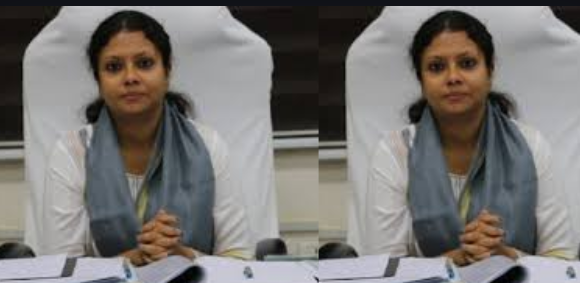
In India’s administrative system, some careers are built quietly—through years of fieldwork, policy execution, and institutional trust. Priyanka Das belongs to that category of officers whose influence is not defined by visibility, but by the breadth of responsibilities she has handled across governance levels.
A 2009-batch IAS officer of the Madhya Pradesh cadre, she has moved through roles that demand both ground-level sensitivity and high-level policy thinking. From district administration to leadership positions in state departments, her journey reflects a steady accumulation of experience rather than a single defining moment.
This well-structured post by ProfileHub focuses on Priyanka Das”s age, estimated net worth, educational journey, husband, and religious views.
Profile
| Field | Details |
|---|---|
| Full Name | Priyanka Das |
| Date of Birth | April 19, 1984 |
| Nationality | Indian |
| Profession | IAS Officer |
| Cadre | Madhya Pradesh |
| Batch | 2009 |
| Education | B.A. (Political Science), M.A. (Political Science) |
| Current Role | Secretary, MSME Department (as of 2025) |
| Marital Status | Married |
| Spouse | Civil servant (name not publicly disclosed) |
Early Life and Background
Priyanka Das was born in West Bengal, a region with a long intellectual and political tradition. Growing up in an environment where public discourse and education often intersect, she was exposed early to ideas that go beyond textbooks—questions about governance, equity, and social change.
While details of her childhood remain largely private, her later academic choices suggest a clear inclination toward understanding political systems and public institutions. This kind of early intellectual direction often shapes not just career decisions, but also how an individual interprets responsibility within public service.
Her journey into the civil services can be seen as a natural extension of that interest—a move from studying governance to actively participating in it.
Education
Priyanka Das pursued her undergraduate studies in Political Science from the University of Calcutta, one of India’s most established academic institutions. The discipline itself is less about memorizing theories and more about understanding how power, policy, and society interact.
She later went on to complete her postgraduate degree in Political Science from Jawaharlal Nehru University (JNU), Delhi—an institution known for its rigorous academic environment and emphasis on critical thinking.
This academic background provided her with a strong conceptual foundation. It also likely helped her navigate the layered realities of administration, where decisions are rarely isolated from political and social contexts.
Career Journey: From District Administration to Policy Leadership
Priyanka Das entered the Indian Administrative Service through direct recruitment, joining the Madhya Pradesh cadre in 2009. Like most IAS officers, her early years would have been spent in field postings—roles that form the backbone of administrative experience in India.
Early Roles: Learning Governance on the Ground
Her tenure as a Collector and District Magistrate stands out as a critical phase. These roles are often described as the “face of government” at the district level, requiring officers to manage law and order, oversee development programs, and respond to crises.
Working in such positions means confronting the gap between policy design and real-world implementation. It is where abstract plans meet logistical constraints, and where administrative decisions directly affect people’s daily lives.
Expanding Responsibilities
Over the years, she has held a wide range of roles, including:
- Municipal Commissioner
- Managing Director in government enterprises
- Mission Director for development programs
- Deputy Director and Joint Secretary-level assignments
Each of these roles comes with a different set of expectations. Moving between them requires adaptability—shifting from urban governance to program implementation, from administrative oversight to strategic planning.
Recognition and Achievements
Her work has been acknowledged through several national and state-level recognitions, including:
- Beti Bachao Beti Padhao initiatives, focusing on gender equity
- National Water Awards (2018), linked to water conservation and management
- Kayakalp Awards, which emphasize improvements in public health facilities
- Saakshar Bharat National Literacy Award (2017), highlighting efforts in education and literacy
These recognitions are not merely ceremonial; they point to sustained engagement with sectors that are central to human development—education, health, gender equality, and resource management.
Current Role: Secretary, MSME Department
As of 2025, Priyanka Das serves as Secretary in the Micro, Small and Medium Enterprises (MSME) Department. This role places her at the center of economic development at the state level.
The MSME sector is often described as the backbone of India’s economy, supporting employment, local industries, and entrepreneurship. Leading this department involves:
- Designing policies to support small businesses
- Addressing challenges in credit access and infrastructure
- Promoting innovation and local enterprise growth
Her appointment reflects a shift from primarily administrative roles to strategic economic leadership.
Leadership and Influence
Priyanka Das’s career reflects a form of leadership that is both layered and adaptive. Having worked across sectors, she brings a cross-functional understanding to governance—an ability to see how education, health, economy, and infrastructure intersect.
Her academic grounding in political science likely informs a more analytical approach to decision-making, while her field experience ensures that those decisions remain practical.
Officers with such a profile often act as bridges—connecting policy intent with implementation realities.
Her work in areas like literacy, water management, and public health also suggests a focus on long-term impact rather than short-term visibility.
Personal Life
Priyanka Das is married to a fellow civil servant, although she has chosen to keep details about her spouse and family life largely private.
This discretion is common among senior bureaucrats, particularly those in sensitive or high-responsibility roles. It allows them to maintain a clear boundary between public duty and personal space.
What is evident, however, is that her professional journey has required significant commitment—often involving transfers, long working hours, and high-pressure decision-making.
Net Worth
There is no publicly confirmed information regarding Priyanka Das’s net worth. As a career civil servant, her income is primarily derived from her government salary and official benefits, structured according to established pay scales.
Conclusion
Priyanka Das’s career is not defined by a single headline achievement, but by a pattern of sustained responsibility across different layers of governance.
From district administration to state-level policy leadership, she represents a kind of bureaucratic continuity that often goes unnoticed but is essential to how systems function. Her work in sectors like education, water management, and MSME development reflects a broader commitment to structural change rather than isolated interventions.
In a system where outcomes depend as much on execution as on intent, officers like her play a critical role—ensuring that governance is not just designed, but delivered.
FAQs
1. Who is Priyanka Das?
Priyanka Das is a 2009-batch IAS officer of the Madhya Pradesh cadre, currently serving as Secretary in the MSME Department.
2. What is her educational background?
She holds a B.A. in Political Science from the University of Calcutta and an M.A. in Political Science from JNU, Delhi.
3. What are some of her key achievements?
Her work has been recognized through awards such as the National Water Awards (2018) and the Saakshar Bharat National Literacy Award (2017).
4. Is Priyanka Das married?
Yes, she is married to a civil servant, though details are not publicly disclosed.
5. What is her current role?
She is serving as Secretary in the Micro, Small and Medium Enterprises Department as of 2025.
Leave a Reply